


Modernization
VA launches revamped burn pit registry with automatic enrollment
The upgraded database of veterans exposed to toxic pollutants and trash burn pits came after “extensive feedback” showed the platform was difficult for many retired service members to navigate.


Cybersecurity
Senate confirms first-ever Pentagon cyber policy chief
The new position would help the DOD increase its public-facing cyber outreach efforts.


Artificial Intelligence
Education Dept. offers guidance on developing AI for the classroom
Developer-educator collaboration and ethics are some of the pillars Education officials highlighted as crucial to building and deploying responsible AI solutions in the classroom.


Artificial Intelligence
Congressional agencies report progress on AI adoption
The House Administration Committee said in the new report that it is also focused “on applying the House’s AI guardrails to the acquisitions process.”


Cybersecurity
Critical infrastructure group launches effort to aid federal agencies’ cyber defenses
The federal government’s cybersecurity posture has been spotlighted several times since last decade’s OPM breach.


People
CISA names Lisa Einstein as first chief AI officer
The new position is part of the agency’s larger strategy to incorporate responsible artificial intelligence solutions both internally and externally to critical infrastructure partners.


Artificial Intelligence
Generative AI tool is deployed aboard the International Space Station
Booz Allen’s large language model application was uploaded to the space station’s national lab as part of “a forward-leaning payload experiment,” according to the firm.


People
East-West prisoner exchange brings home American journalist, returns convicted Russian hackers
The swap that brings home reporter Evan Gershkovich and others will in turn send back imprisoned Russian hackers convicted for pilfering millions of dollars in schemes against U.S. targets.
Modernization
Senate panel advances House-led TMF update
Congress is looking to enshrine repayment requirements in the legislation that supports the Technology Modernization Fund.
Artificial Intelligence
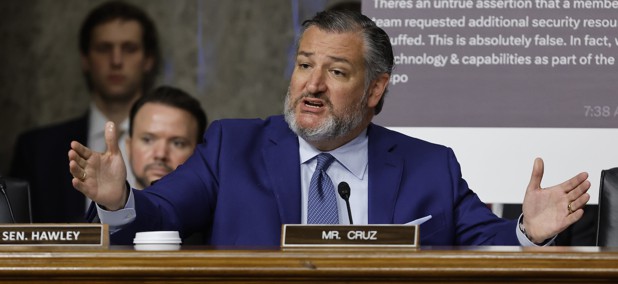
Party line differences emerge over AI oversight, international partnerships
At a Senate Commerce Committee markup hearing, Sen. Ted Cruz, R-Texas, offered multiple amendments designed to reel in federal oversight in AI software development that he says could impair innovation.

Cybersecurity
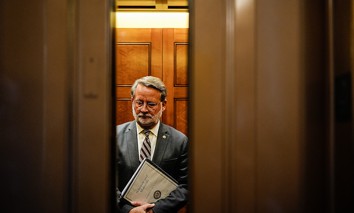
Senate panel advances cyber regulatory harmonization bill
The bill aims to address overlapping cyber laws that CISOs say have caused compliance headaches.
Emerging Tech
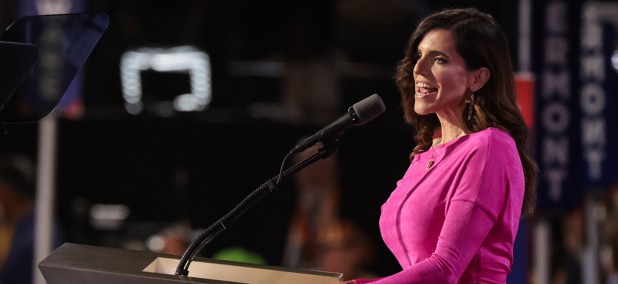
New bill pushes VA to examine how blockchain can enhance its work
Legislation from Rep. Nancy Mace, R-S.C., would require VA to explore the benefits and risks of using distributed ledger technology.


Cybersecurity
New NSA-powered AI tool would help industry optimize cyberdefense testing
Autonomous Penetration Testing would overhaul manual work needed to check the cyber armor of firms that service the DOD community, said Cyber Command and NSA head Gen. Timothy Haugh.


Digital Government
Education says a new system will help borrowers — lawmakers aren’t so sure
“This new system lacks transparency,” four senators told the Department of Education.

Digital Government
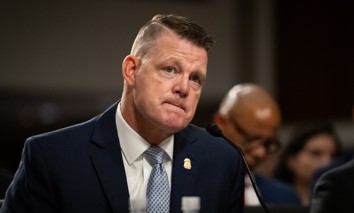
Acting Secret Service head suggests that better tech could have thwarted would-be Trump assassin
Ronald Rowe Jr. told a Senate panel that additional cellular bandwidth and the use of counter-drone technology could have averted the attempted assassination of former President Trump.


Cybersecurity
New tech, personnel will help CISA with coming rush of cyber incident reports
CISA said “an automated mechanism” could help it better process and review a coming deluge of new cyber incident reports but could not be accounted for in its current budget.


Artificial Intelligence
Human performance tech with AI assists athletes in the 2024 DOD warrior games
This was the first time that wearable technology and artificial intelligence also took the field to assist some of the competitors.


Modernization
Senators take another crack at solving over-classification
The bipartisan Classification Reform for Transparency Act would establish a new task force to narrow the criteria for classifying documents and make it harder for agencies to exempt records from automatic declassification.


Artificial Intelligence
NTIA advocates open AI model weights in report to White House
The National Telecommunications and Information Administration issued a report to the White House recommending open-source AI foundation model weights with sufficient risk mitigation frameworks.


Digital Government