Insights
EXECUTIVE BRIEF: How Public Sector Leaders Are Putting AI to Work
<p>This Executive Brief details how public sector leaders are moving past experimental pilots to deploy scalable AI on a single, unified, and governed data platform.</p> <p>Explore real-world use cases, strategic recommendations, and proven field results showing how agencies are drastically reducing costs and accelerating time-to-insight.</p> <p><strong>Download the executive brief to learn how to:</strong></p> <p>-Coordinate specialized agents across programs, case files, documents and legacy operational systems</p> <p>-Give teams natural-language access to trusted, auditable insights</p> <p>-Detect fraud, service disruptions and public safety risks earlier</p> <p>-Securely share data across agencies while protecting sensitive information</p>
From Dashboards to Decisions in Minutes - How Databricks Genie helps Public Sector in the agentic era
<p>Public sector agencies are using conversational AI to get instant, auditable answers from their data without compromising governance or security.</p> <p><strong>Download the solution brief to learn how to:</strong></p> <p>-Give teams natural-language access to trusted insights complete with clear narrative explanations, tables, and visualizations.</p> <p>-Standardize mission logic across agency domains using shared metric definitions in Unity Catalog.</p> <p>-Accelerate operational decisions across program eligibility, budget planning, and predictive maintenance while maintaining full row- and column-level security.</p> <p>See how public sector organizations are reducing reporting cycles from weeks to minutes and speeding up regulatory reviews from days to an hour.</p> <p><strong>Download Now</strong></p>


Stop Identity-Driven Fraud Before It Spreads: A Lifecycle Playbook for Government Programs
This guide helps public sector fraud, identity and service leaders understand how risk-based authentication can reduce exposure to identity-driven fraud while minimizing friction for trusted constituents.
Carahsoft | Innovation in Government: Seizing the Intelligence Advantage
Emerging Tactics for Cybersecurity
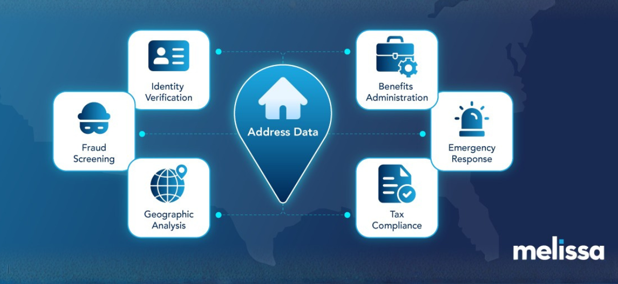
One Citizen Record, Many Federal Missions
Citizen data changes; federal systems need to keep up to avoid costly gaps in identity verification

Turning Local Government Cybersecurity Challenges into Opportunities
<p></p> <p>Today's citizens expect convenient, personalized digital services, from paying for parking through an app to renewing license plates online. While AI and machine learning can help governments deliver these experiences, agencies often face unique challenges that slow technology adoption. As a result, 80% of government organizations remain in the early stages of digital maturity. Download the eBook to learn more.</p>


The Future-Proof Path to Modernizing IT Infrastructure for K-12 Education
<p></p> <p>Before the introduction of the remote learning landscape, K-12 schools were keeping pace with the 10 to 15-year roadmaps they had established to implement incremental systematic updates to their infrastructure. But when those plans were suddenly accelerated — compressed into a sliver of their previously established timelines — budgets, too, were pressure-tested. Many schools struggled to secure the funds for updates that were required to support the new demand for remote access. Download the eBook to learn how K-12 schools are adapting infrastructure to meet evolving digital learning needs.</p>

The Case for Modernizing IT Infrastructure in Higher Education
<p></p> <p>Digital transformation is reshaping higher education. As hybrid learning setups, research initiatives, and other campus technologies evolve, IT leaders face growing demands on infrastructure. Download the eBook to see the benefits of modernization for higher education.</p>
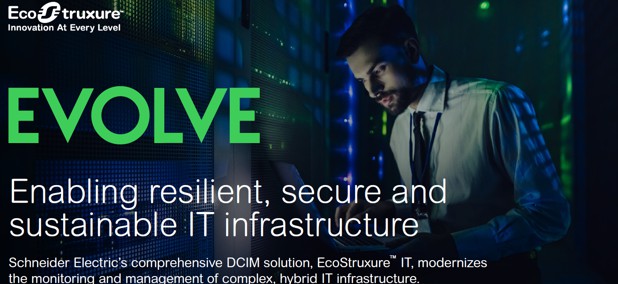

Enabling resilient, secure and sustainable IT infrastructure
<p></p> <p>EcoStruxure™ IT ensures business continuity by enabling simplified remote monitoring and management and proactive insights. Plan, model, and maintain with peace of mind – on premises, in the cloud, or at the edge. Download to learn more about the benefits of EcoStruxure™ IT.</p>
Carahsoft | Emerging Tactics for Cybersecurity
Emerging Tactics for Cybersecurity

Bringing Compliance into View
<p> <style type="text/css"><!--td {border: 1px solid #cccccc;}br {mso-data-placement:same-cell;}--> </style> Gaining visibility into unreported income is a challenge. Learn now IVIX is using AI and publicly available, open-source data to illumicate hidden business activity and the people behind it.</p>
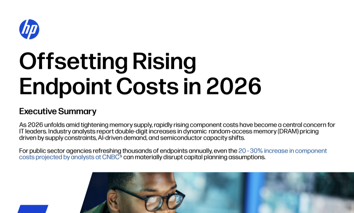
Offsetting Rising Endpoint Costs in 2026
<p>As 2026 unfolds amid tightening memory supply, rapidly rising component costs have become a central concern for IT leaders. Industry analysts report double-digit increases in dynamic random-access memory (DRAM) pricing driven by supply constraints, AI-driven demand, and semiconductor capacity shifts.</p> <p>For public sector agencies refreshing thousands of endpoints annually, even the 20–30% increase in component costs projected by analysts at CNBC can materially disrupt capital planning assumptions.</p>

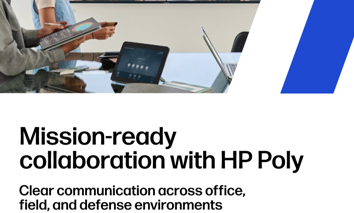
Mission-ready collaboration with HP Poly
<p>HP Poly helps federal agencies collaborate with confidence through secure solutions built for mission continuity and operational resilience. Backed by more than 80 years of federal innovation, HP Poly is designed to meet government security, operational, and procurement requirements.</p>

HP Quantum-Resistant Cryptography - A Strategic Defense for the Quantum Era
<p>Quantum computing promises breakthroughs in many fields, but it also threatens the cryptographic foundations that secure modern digital systems. At HP, we are already acting to protect our customers and their data against this emerging threat. HP began executing its quantum-resistant migration strategy ahead of national authorities such as NIST or NSA issuing specific timelines for migration. Our proactive roadmap has helped ensure a resilient firmware foundation for HP’s PCs and printers long before large-scale quantum attacks become practical.</p>

Enabling Local AI for Federal Maritime Intelligence - A Vision-Language Model Workflow on the HP ZGX Nano
<p>Federal agencies processing sensitive imagery face a fundamental technology gap: commercial laptops lack the computational power to run capable AI models locally, while cloud-based solutions introduce unacceptable data security risks for classified or sensitive operations.</p>
Beyond the Hype: How AI Can Reshape Government Operations
<p>Discover how federal agencies can strengthen security, governance, and operational resilience while accelerating AI adoption. Learn best practices for safeguarding AI, modernizing security operations, and enabling secure collaboration across government.</p>
Supercharging Government Modernization with Agentic AI in 2026
<p>Explores how Federal agencies can use agentic AI to modernize legacy systems, automate development and security, improve workforce efficiency and maintain secure, flexible operations.</p>
