Menu
  • Event Video
  • Resources
  • Speakers
 background image

Congress passed the Federal Information Technology Acquisition Reform Act in late 2014 to increase statutory authorities for CIOs and reduce the government’s $86 billion IT spend. Almost one year after White House guidance and policy implementations, Congress has released FITARA implementation scorecards that grade agencies on their performances thus far.

What agencies are making the grade so far, and how?

On December 16, Nextgov sat down with former and current CIOs, oversight leaders and other policy experts to discuss FITARA’s current status across government and future evolutions now that a policy foundation has been laid.

Watch event video below to hear:

  • Data and criteria used to evaluate FITARA implementation scorecards

  • Strengths and weaknesses of FITARA thus far and where government CIOs see FITARA being most effective in the future

  • Challenges and drawbacks to FITARA implementation from both the technology and management perspectives

  • If and how new authorities have affected their operations

Underwritten by:

Event Video

Welcome and Introductory Remarks
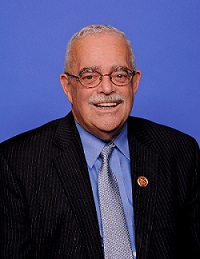
Congressman Gerry Connolly (D-Virginia)
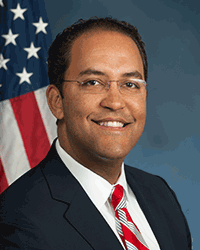
Congressman Will Hurd (R-Texas)
Future Ready Enterprise
Insights from the Implementors
Gene Dodaro, Comptroller General, U.S. Government Accountability Office

Resources

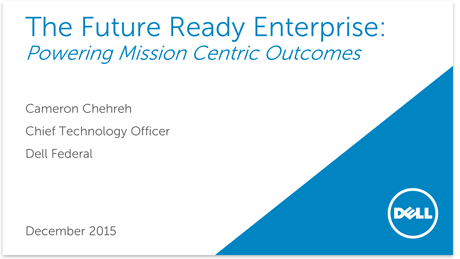
The Future Ready Enterprise Presentation

Keynote Speakers

Congressman Gerry Connolly
(D-Virginia)

Gene Dodaro
Comptroller, U.S. Government Accountability Office

Congressman Will Hurd
(R-Texas)

Session Speakers

Cameron Chehreh
Chief Technology Officer, Dell Federal

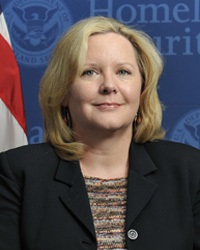
Margie Graves
Deputy Chief Information Officer, Department of Homeland Security

Richard McKinney
Chief Information Officer, Department of Transportation

Jack Moore
News Editor, Nextgov

Constance Sayers
President, Government Executive Media Group

Dr. Paul Tibbits
Deputy Chief Information Officer for Architecture, Strategy, and Design, Department of Veterans Affairs

  • Exercise Your Privacy Rights
  • Exercise Your Privacy Rights